Posted on 1 Comment

My Self-Employment Journey – How I Created My Own Job While Dealing with PTSD

THE BEGINNING OF MY SELF-EMPLOYMENT JOURNEY


Let’s rewind to October 2018. I had been studying to become a social and health care assistant for 2 months and had tried to balance a normal life as a student while dealing with PTSD – meaning being in constant high alert.

I was exhausted all the time from never being able to relax. One day felt like a week and I knew that if I had to continue studying I would also have to do intern work full time for 1,5 years and I just realised that I couldn’t take 3,5 years of that.

MY PTSD-SYMPTOMS

Being in constant high alert for me meant having a racing heart, being hypervigilant – always being aware of my surroundings, being hyper sensitive to other people’s actions, words, facial expressions, tone of voice and body language, sweating and blushing if someone just approached me, feeling a sense of doom around every corner – that something would give me a huge shock which would send me over the edge. It felt like having a gun pointed to my head all the time, not being able to breathe freely or relax, feeling in constant danger.

At the same time I had flashbacks every day. Often a teacher would forget about me and I was sent right back into childhood and felt so shameful, that the whole world hated me and I was unlovable which made me feel more unsafe.

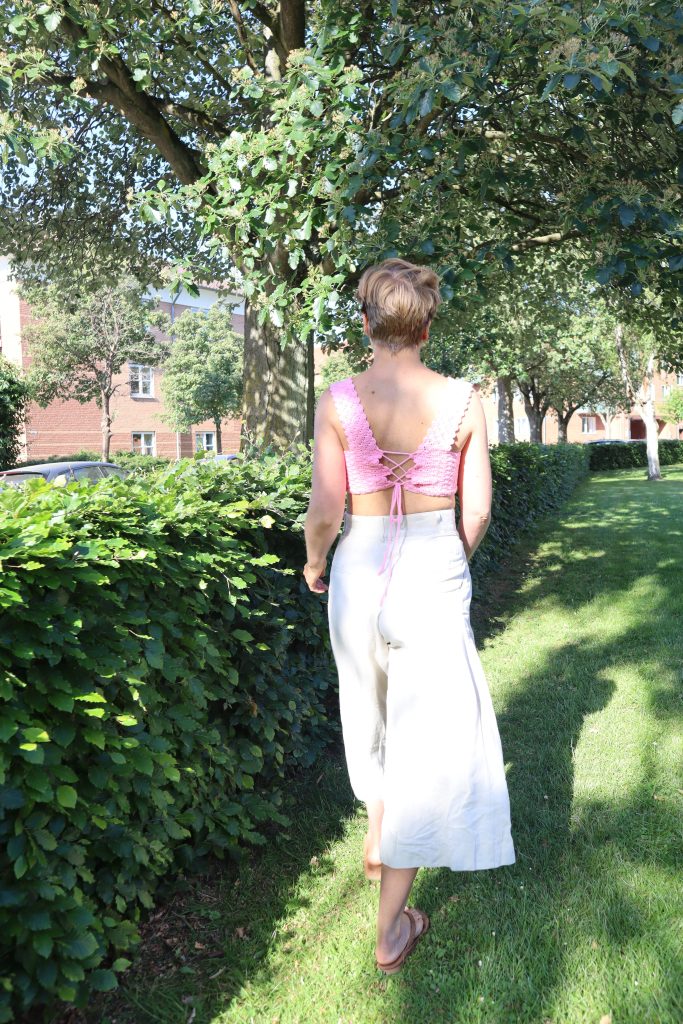
At the same time it was like I had another life on the side (crocheting and selling crochet tops), that was more interesting, fun and filled with freedom – but a life that I thought to myself would always be an illusion, something unattainable and unimaginable for me.

TRYING TO FIT IN


I thought that I would have to live a normal life – work a full time job somewhere so I could provide for my children, go traveling, buy a house etc. Then I realised I actually didn’t want children, that I was happy about living in my tiny apartment and not owning my own place and didn’t feel a need to go traveling.

I just wanted to feel safe and I was happy by the thought of just earning enough to get by and feel relaxed. But it felt like my small expectations of freedom and relaxation were still not possible.

Even working 10-15 hours a week would still mean I had to be in constant stress to earn money to pay my bills. Just the thought of earning money was so stressful to me.

BEING GASLIGHTED BY THE SYSTEM

During the next 10 months – from October 2018 to August 2019 I was unemployed.

I was broken down, but I still had to fight the battle alone – the battle of authorities not taking my mental health serious and just wanting to get me through the system as fast as possible – into any job (even if that would mean I would then break down again and get back into the system again). It felt like screaming into an empty corridor only hearing my own voice echo back. No response, no empathy, no belief in me.

I had heard of so many people experiencing the exact same thing as me. If you didn’t look depressed, anxious or suicidal then you were not.

Imagine how traumatic this is when you have been dealing with being gaslighted your whole life and then the authorities that were suppossed to help you just continue the gaslighting.

BEING IN THE SYSTEM WORSENED MY PTSD

In the end just stepping into the job center to have my weekly meeting with a social worker I would sit with the hands over my head and my thumbs pressed into my ears to block out any sound or light.

I learned to be completely inside myself, because I knew that no matter how much I tried no one believed my symptoms were serious and that I needed their help. I had to change to become a person without PTSD, instead of them helping me find a place to work where my PTSD wouldn’t get so triggered.

I couldn’t imagine a life in freedom but I also couldn’t imagine a life in panic.

I WOULD RATHER BE POOR, IF IN RETURN I CAN BE FREE

So what drove me into self-employment?

It was the unbearable thought of living a life in fear and stress, controlled by authorities who didn’t care about my well-being. I would much rather not be able to pay my bills or not get food on the table, and then at least have my freedom, be my own authority.

I had to actually think: “what is the worst thing that could happen?” . The answer: “homelessness and starving”. And that sounded more appealing to me than being in a state of panic and hypervigilance.

The physical stuff didn’t scare me as much as everything I had already experienced.

Quitting welfare and going full time as a crochet designer was one of the easiest things I had done in my life, because everything else seemed even more impossible.

Choosing a life of self-employment and freedom was uncertain and something I had never done before – so at least I had to try it to see if it was possible, because I knew that a life in fear and stress would eventually kill me.

I had no other option left, there was no way back.

GETTING OUT OF THE SYSTEM FOR THE LAST TIME

In my last phone call with my social worker I laughed ironically while I told him “I might just move into a tent and create my own job” (though I didn’t actually mean or believe it).

So I quit welfare the 1st of August 2019 and somehow I knew that this would be the last time I would be in the system.

I was relieved but afraid because I didn’t believe that I would be able to earn enough money from crochet to make a living off it.

I had lived with as little as possible the past months so I had a little bit of money saved up that I could live off and I still had my part time job as a blind assistant but I usually only worked 2-5 hours a month. Though having a safety net helped the fear a lot.

ADJUSTING TO A LIFE OF FREEDOM
The first many months in freedom I still woke up every morning in panic (as I had done every day for the past many years) because I thought I had to be somewhere where I would be in constant high alert and fighting to be understood. I still couldn’t understand I was free of it.

All that time (in the system, in jobs, in school, in relationships) where I had worsened my PTSD and given me another layer of trauma to deal with.

I was finally free and there was a a great deal of relaxation but my brain and body was still reacting like I was a captive in my own life.

LIVING CHEAPLY

I started dumpster diving for food and I cut down all my expenses – no wifi, no streaming services, no money for any kind of unnecessary things. I only spent money on food and bills.

Six months went by and I had earned about 1/4 less than over the Summer, which meant if I put it all together I would have enough to pay my bills and food for maybe 1 month. So I was getting a little frightened and it was winter so not a lot of demand on Summer clothes either.

LEARNING TO MAKE & SELL PATTERNS

Gradually I started getting demands on the patterns for my designs so I started looking up crochet patterns online to see how the layout was and how they were written. And I tried to freestyle my way through it. I thought to myself: “How would I want to read a pattern?”. So basically I wrote a pattern for myself that I would then create a listing for on Etsy.

I upgraded my website subscription so I could start selling phsyical and digital items there as well. Suddenly I got a holiday pay that was bigger than I had expected and my friend out of the blue gave me money because her holiday pay was a lot bigger than mine.

I started having more and more money on my account and realised I wasn’t using my savings anymore. I suddenly had more more money than I needed to get by.

As the patterns started to sell more and more and my website got more and more visitors I started to feel that this might actually be possible. In August 2020 I officially became a registrered business – I had applied the year before but I closed it again immediately because I didn’t believe it would work out.

TODAY

The past 10 monts I have earned more than any other job I have ever had.

It’s hard to understand and I pinch myself everyday.
I don’t wake up with a panic attack (unless I have had bad night). I feel relaxed throughout my day, even though I still struggle with PTSD, anxiety, depression and shame.

I am living the life I couldn’t even imagine – a life of freedom, relaxation, empathy and joy. With time and space for my healing process. Where I can respect my own boundaries, be my own authority, not minimise my symptoms and share what I learned with all of you.

When I look back at just 6 months ago I believe much more in myself and my abilities. I very rarely have the thought that “This won’t work out”, which I had everyday when I first started out.

It’s not just because it’s actually going well (because even though it’s going well I can still have doubts and fear for the future — will it last?), it’s more because I am actually living a life more in harmony with my values, needs and wants.

I am giving myself the life I deserve and seeing how it’s making me more and more comfortable in myself and in my life is giving me a greater sense of trust and belief in myself and the world.

I don’t have the same obsession about the future and wheter or not I will continue to do this kind of work or not. I try and focus on the here-and-now and do the things I enjoy doing on this particular day.
If at some point I want to do other things, like work as a chef, open a café, work therapeutically with other people, be a mentor or musician I have trust.

Because if I could do the unimaginable, I can do anything!

I feel extremely proud of myself and where I have come and so grateful for everyone of you who has been there by my side during this whole process. Those who have bought my digital or physical products, tagged me, sent me photos, reposted/liked/commented/read my posts and written to me and shared your own story.

Thank you for believing in me when I didn’t.

A FINISHING THOUGHT

I don’t believe the saying “believe in your dreams and they will come true”.
Yes, our thoughts have impact but what if we don’t believe? Can we only start living once we start to believe?
The other day in a feeling of hopelessness I was reminded that:

Just because you lose all hope, doesn’t mean that no good will come to you.

What if believing in ourselves comes from the process and experience of listening, being aware and showing ourselves patience and comfort even when we don’t believe?

So if you doubt yourself, don’t feel good enough, don’t feel ready, don’t have a support system, have been hurt too much in the past, fear that it will only go downhill – it’s okay.

Your life doesn’t require you to be fearless.
Your life doesn’t require you to believe, imagine or visualize something for it to become a reality.

Start now – do what makes you happy, enjoy your passion, take your time, go in your own pace.
Wanting something and going after it is enough for it to come true!

And if all else fails, just know:
I believe in you. There is a way, a place for you too.

Posted on Leave a comment

Why Being a Selfish Crocheter Can Help You

What do I mean by that?

Well, creating something for yourself, crocheting an item just for you, can help you slow down. On the other hand, focusing too much on the external factors, others approval, crocheting the “right” way and being in a rush to finish a crochet project can become stressful.

So let’s dive into how crocheting can be a stressor and how we can use it to slow down instead:

Get the crochet pattern for Zoey top and learn how to crochet this cute and simple ribbed top, click here.

Being in a rush

Sometimes I notice how I rush to get ”somewhere”.

I am in a hurry to finish projects, because I falsely believe that my work is not good enough, so I shouldn’t take my time with it – it’s better to get it over with so I can get to the next step where I will do and be better than before.

In that state the present is never enough.

I am too hard on myself, judging myself for not doing it good enough and judging myself for rushing and not taking my time. Because I know that I am good enough, but in that moment I am out of touch with myself and the truth.

I feel behind in life and in my creations. I feel that I am not good enough and therefore I have to catch up with everything I have not yet done. I have to reach every goal I have not yet reached, so I can feel good enough in the present moment. But it makes no sense as I am abandoning the present moment to be somewhere else that is not here. Be stuck in my mind and in the future and in my worrying.

A to-do list that never ends

Get the crochet pattern for Belle dress and learn how to crochet a romantic and reversible wrap dress, click here.

It feels like I’m in a race with myself. I am on negative 100 and have to rush mentally just get to zero.

It feels like having a whole list of to-do’s and everytime I cross off something, 10 more things appear. And no matter how much I do, crochet or rush the feeling of inadequacy just becomes worse and worse.

Sometimes I find myself getting annoyed about how many ideas I have in mind because I feel like I’m out of time – that if I had to create all of that I wouldn’t sleep, eat or do anything else for the rest of my life. It feels exhausting.

Enjoying the unfinished projects

Get the free crochet pattern for this bag and learn how to crochet a granny square bag for free, click here.


Then this morning I noticed something. I noticed the dress I have been working on for weeks that I have never felt rushed with and the items that are finished, yet I haven’t even woven in the ends – and I don’t care!

I don’t mind having unfinished projects and taking my time when I feel the intention to crochet and create arises from me. Authentically. Without expectations from the outside world.

I am practising telling myself:
I am enough.
I have enough.
I don’t need to do more, to be okay, worthy or successful.
I don’t need the things I create.
I have and am enough right now.


I create because I want to, not because I need to.
I create for myself, not for others.

When my focus is outwards on the world and what I think is expected of me it will never be enough – because there will always be a need out there, there will always be expectations but it’s not my job to please others, do it the “right” way, post the right things at the right time, create the “right” things at the right time.

The need to rush comes from fear.

I get scared that I won’t be able to continue to create for a living, that what I create will not be enough to pay the bills. I always thought the worst part about having a creative job was not creating or having ideas enough but it’s the opposite. The challenge for me is to tell myself that it is enough; that I will still be able to pay my bills even if I create less.

Being a selfish crocheter

Get the crochet pattern for Zoey top and learn how to crochet a simple, ribbed camisole, click here.

When I focus on crocheting for myself I feel my body breathe deeper, I feel more settled, more trusting of myself and my path, because I am here now, and there is not anywhere I need to get to.

Everything happens right now, my ability to sense, create, be present, grow, find safety and slow down – nothing ever happens in the future. It happens now.

Therefore I can’t rush to get somewhere because there is no “there” there. I am not rushing to get somewhere I am rushing because I falsely think that it will make me feel less stressed, incapable and inadequate when in reality rushing makes me feel all those things.

So this is a reminder for me, and for you, to do and be right now from the intention that arises right now inside of you.

Be with that. Create with that. Slow down with that.

Create for you, live for you.

Get the crochet shorts course here.


Posted on 4 Comments

Free Crochet Pattern How to Crochet a Unique Granny rectangle Jute Bag

JUTE BAG

Hook: 4 mm
Yarn: 420 grams. 2 strands of jute – these two strands counts as 1 strand of yarn.
You need 8 squares for this bag.
Stitches (US TERMS):
Slip stitch, chain, single crochet, double crochet, decreased double crochet.

3 decreases double crochet:
Yarn over, insert hook, pull yarn through, yarn over, pull through 2 loops, yarn over, insert hook, yarn over, pull yarn through, yarn over, pull through 2 loops, yarn over, insert hook, pull yarn through, yarn over, pull through 2 loops, yarn over, pull through all loops.

GRANNY SQUARE


Round 1: Chain 4, connect to a ring with 1 slip stitch in the 1st chain, chain 2. Make 12 double crochet in the ring, finish with 1 slip stitch in the first double crochet.

Round 2: Chain 3, make 1 slip stitch in the next double crochet. Repeat and finish with 1 slip stitch in the first double crochet = 12 arches

Round 3: Make 1 slip stitch around the first arch. Chain 2. Make 3 decreased double crochet around the arch, chain 3. Make 3 decreased double crochet around the next arch.
Repeat and finish with 1 slip stitch in the first decreased double crochet.

Round 4: Chain 3. Make 1 slip stitch around the next arch, chain 3, make 1 slip stitch into the decreased double crochet. Repeat and finish with 1 slip stitch into the first decreased double crochet = 24 arches.

Round 5: Make 1 slip stitch around the first arch. Chain 2. Make 3 double crochet around the same arch, chain 3.
Skip 1 arch and make 3 double crochet around the next, chain 3, skip one and make 3 double crochet around the next. Repeat and finish with 1 slip stitch in the 1st double crochet in the beginning of the round.

Round 6: Make 1 slip stitch into the next double crochet. Chain 3, make 1 slip stitch around the next arch, chain 3, make 1 slip stitch in the 2nd double crochet, chain 3, make 1 slip stitch around the next arch.
Repeat and finish with 1 slip stitch in the first slip stitch in the beginning of the round.

Round 7: Chain 3. Make 3 single crochet around each of the next 6 arches. Chain 3. Make 3 single crochet into each of the next 6 arches, chain 3 – repeat and finish with 1 slip stitch around the first arch.

Chain 1 and break off the yarn. Leave about 25-30 cm yarn end to join the squares.

JOIN THE SQUARES

Start by making 1 side of the bag – by connecting four of the squares. Do the same with the other side. Then connect the front and back on 3 of the sides.
Sew them together by sewing through the stitches – back and forth – use only one strand of your yarn end, this way you can sew in both directions with the yarn end. Make sure to match up the corners (where you chained 3) and sew through the corners a few times.

STRAPS

Insert your hook in the 7th single crochet counted from the middle – make 1 slip stitch, chain 2. Make 1 double crochet in the same stitch, make 1 double crochet in the next 5 stitches, chain 2 and turn over. Make 1 double crochet in each stitch, chain 2 and turn over. Crochet back and forth until you have 20 rows or however long you want the strap to be. Break off the yarn and sew the other side to the bag. Do the same on the other side.

More crochet accessories here:

Posted on 3 Comments

Free Crochet pattern How to Crochet a Top with Round Bra Cups

MOLLY TOP

If you want to learn how to crochet these shell stitch mesh pants with elastic waist, then you can find the crochet pattern here.

You can also try a crochet pattern for a mermaid top with round bra cups and mesh lace body.


Remember to use the video below to help you with this crochet pattern:


You can download the free pdf file here.


Posted on Leave a comment

How Much to Pay Yourself

What kind of work are you doing?

ACTIVE WORK
You are selling physical items or actively participating in every sale that you make.

Example: custom made or ready-made products, coaching/mentoring, sponsored posts

PASSIVE WORK
You make the work once and then the item can be sold again and again automatically without you actively doing anything.

Example: patterns, e-books, videos, courses, affiliate links

Is this your part time or full time job ?

There is a big difference in what you need and what you want to earn.

If this is your full time job you might both have the time and energy to focus on your job and therefore be able to make more money. But if it’s just a part time job and you don’t depend on it, you can work less (and work when you want to) and therefore you don’t need to earn that much.

If you are in-between and you want to make this your living, my advice is to keep your other job so you know that you can pay your bills – if you are able to go down in hours so you just earn what you need, then you can spend the free time you have on your own business but still be able to take it slow and do it your way.

How much to pay yourself

Penge, Card, Forretning, Kreditkort, Betale, Shopping

Example:
Money: You need/are satisfied with 175 euro per week – 700 euro per month.
Time: You want/are able to work 40 hours a week – 160 hours a month.
Your hourly rate: 175/40 = 4,3 euro

HOW MUCH THE PRODUCT HAS TO COST
Let’s say you can make 10 active products a month.

700/10 = 70

That means that your product has to cost 70 euro.

HOW MANY PRODUCTS YOU HAVE TO SELL
Let’s say a passive product costs 5 euro.

700/5 = 140

That means you have to sell 140 passive items a month to earn 700 euro.

How to price your products

Option 1.
You can look at all the individual factors regarding the product and then calculate how much that is.

TIME
– How much time did you spend making the item (and how much do you want to pay yourself an hour)?
MONEY
– How much money did you spend on materials?

You spent 15 hours. You pay yourself 4,3 euro per hour. The materials cost 10 euro.
15×4,3
+ 10 = 74,5

75,55 euro is what the product should cost.

Option 2.
Forget about the time and money spent and instead find a fixed price for that item.

TIME/MONEY/ENERGY

– How much time, money and energy did you spend on this product? Is this a product you made as a “test design” where you were just playing around?
QUALITY
– How is the quality of the product and materials? Is the work kind of slobby or is it done with a lot of effort and precision?
OBJECTIVELY
– If you saw this in a shop, how much would you pay for it?

What amount do you think is fair when keeping these factors in mind?

Custom made or ready-made products

In my opinion custom made and ready-made items should be priced differently as there is much more work going into custom made products.

CUSTOM MADE
– communicating back and forth with customer
– working with their specific measurements
– making the item in the color, material and style that the customer want
– pricing can be difficult as the item may take longer for some customers than others
– the customer doesn’t exactly know what they get before they receive the item – this can cause uncertainty and stress for both creator and customer

READY-MADE
– the product is already made in the color, material and size
– in the listing you can state all the details about the product – this way the customers knows what they get
– easy to price as you can just determine from the time, material or quality how much you think it’s worth

Setting a goal

It’s a good idea to have a goal in mind – what is your goal – how much do you want to earn and how much do you want to work? Even though it might seem unrealistic right now it’s good to have an idea about where you want to be so you can move towards that.

Final thoughts

Only you can decide what your time and effort is worth. Only you can decide what your hourly rate looks like and how many hours to work.

If you don’t want to work that much then that’s just perfect, there will always be people out there willing to pay a good price for your work. Remember to pick the customers that value you and your work.

There is no recipe on how to do it right. If you want to sell your items cheaply, then do that!

We are all different and the most important thing we can do is stay true to ourselves and what is important to us.


Posted on Leave a comment

What to Do if Someone Copies Your Work

We can’t help but be inspired by each other (even unconsiously). We can’t help but sometimes coincidentally getting the same idea as someone else, or seeing another creator make a design that we ourselves had in mind.

Mirabel top and necklace by FlurJewellery

There is a big difference in finding inspiration and copying, I think copying is okay when:

1) Asking permission from the designer
If you have been in contact with the designer and asked if you can recreate their work and they said yes!

2) Mentioning and tagging the designer
If you are not are to ask permission then at least mention or tag the designer or write in the caption: “Design by…” or “Inspired by…”. This way people seeing the design will know who made it.

Mirabel top

THE PROBLEM WITH COPYING (AND NOT GIVING CREDIT)

Imagine there is a creator that has made a unique design. One of their followers recreate this design and post photos of the creation on their social media (without any credit).

The people following this person see this and have no idea where the design originated from. These people might then either repost the photo or recreate the design for themselves, and suddenly the designer is forgotten all because 1 person didn’t credit.

The same goes if you recreate another’s design and sell the design to a customer. If the creator doesn’t give credit to the designer, the customer of the creator will only give credit to the creator, this way when we are at the 3rd or 4th or 5th link people will have forgotten all about the person who actually designed the item.

The person who is recreating or copying the design is responsible for mentioning the desginer (and also giving this information to their followers/customers so they can give credit too). This is so important to protect the work of the designer, this way people will be able to find their way to the source of the copied design and the desginer gets the credit they deserve.
Yes, you made their design and you did it beautifully – but someone else got the idea, made the drawing, pattern writing, measuring, trial and error and they deserve the credit.

This is also important when you make another creators design from pattern – mention or tag the pattern designer so people will know who the designer is!

Think about big brands like H&M – the only time you really hear about the designer is when celebrities design a collection. The designers working behind the facade you never hear about. Neither do you hear about the factory workers creating the clothes. It’s so important that we all get the credit we deserve.

It makes me so happy when I see someone post a creator’s work and also mention the designer! This is only possible if the creator mentions the designer too, let us make sure that at least the 3rd link from the designer knows who the designer is!

WHAT TO DO IF SOMEONE STEALS YOUR WORK


I’m not gonna say “see it as a compliment! your work is so good, that people are recreating it!”. I hate that, I’m not gonna appreciate someone crossing my boundary. I’ll take is as appreciation when they credit me. Let me just say this: it’s not embarassing to mention that you copied/recreated/were inspired by someone else – we all are! better to say it too much than not enough. We won’t be mad for you tagging us all the time, on the contrary! it’s a win-win – it’s nice to be appreciated and to appreciate others.

1) Leave it

If you don’t care about it, just leave it and focus your energy elsewhere. We can’t avoid copy cats completely.

2) Reach out

You don’t have to be rude or get mad at them (maybe they didn’t intend to copy your work or maybe it’s a coincidence), but a simple: “Were you inspired by my design?” or “I just want to let you know that if you we inspired by my design it would be great if you would mention/tag me”.

3) Create more
See it as a motivation to just create more designs – maybe create something SO unique and special that whenever someone copies your work most will know that you’re the designer.

4) Get design protection
It’s expensive in Denmark and needs to be done with every design, but if you want the extra protection it can be a good idea. This way no one can make or sell your designs and you can take legal action if they do so.

5) Ask for support
Reach out to your followers or family/friends or post a story or photo in your feed about your experiences. Many people will relate and want to support you!

6) Copy cats won’t have success
Relying on others work for success, relying on other’s creativity and hard work and not coming up with idea or being creative yourself? So sad!
The worst is the people who try to get appreciated for making someone else’s work, I find it so selfish and mean, that some people won’t even admit they have copied another’s work, because they’re so desperate to be liked themselves. If you are getting likes and compliments for copying another persons hard work, then that must mean that the designer did a great job – so why not compliment them by giving them credit?

Posted on 2 Comments

How to Start a Crochet Business from Scratch

Do you have a dream of becoming a self-employed crocheter? Are you unsure of how and where to start?
Then continue reading!

You can also get my e-book that focuses on earning money from your craft and create your own job. Buy my e-book here.


I’ve been self-employed for almost 16 months. I spent years before going full time just spending time practising my skills, posting to Instagram and sketching. But it took me 8-9 months from when I decided to go self-employed to being able to live off my income.


1. Crochet every day or as often as you can

Spend your free time crocheting, experimenting, practising and honing your skills, read books and magazines, go online, take photos of your process and finished products.

2. Have a savings account or a part time job on the side.

This way you can focus most of your time on your business but still make sure you get money to pay your bills.

3. Research the crochet market


What are other crocheters doing? What are they’re prices and who are their customers? What do they post on social media?

4. Use social media.

We’re so lucky we have social media to spread our message across continents. Use hashtag to describe what kind of work you do, follow and interact with other crocheters in the same field as yours and post consistently.

5. Define your brand.

How are you working – what’s your inspiration, what kind of work do you like to do in that field?

6. Work with other people.

Find other people in the same field as you or someone who you feel you can work with to help each other get more customers or just get your name out there.

7. Hang up flyers at your local library or reach out to a local newspaper.

You can try and get your name out there in your town or local area.

8. Continue to do what you love.

Even though you are not making any money it will happen for you eventually. It doesn’t mean that you have to break yourself and work 70 hours a week to reach that goal. It takes time and hard work but remember to stay true to your work and take breaks as well so you don’t wear yourself out.

9. Cut down your expenses

The fastest way to make a living from crocheting is to cut down all unnecessary expenses. The less bills to pay the less you need to earn to make a living.


Ideas on how to earn money on your crochet:


– start a youtube channel
– make an online or in-person crochet course
– post videos to Youtube, photos to Instagram
– crochet online or in person
– write an e-book, patterns or sell video tutorials
– start a blog where you share your knowledge
– sell your ready made or custom made products

Posted on Leave a comment

10 Reminders If You As Creator Are Dealing With Low Self-Esteem

Low self-esteem can affect all of us – whether or not we’ve sold none or hundreds of products.

It can hit us when we’re doubting our creations and whether or not we (and our work) is good enough.


I struggle with low self-esteem most of the time, both when creating a handmade piece, taking and posting photos, selling items and making patterns. But it’s getting better day by day. I often doubt whether or not I’m doing it “right” and “to the standard”.

When I dig deeper it’s actually not the fear of having flaws but the fear of someone getting mad at me for not doing my job perfect – or just doing it better. I was used to having a mother who would yell and scream over the tinyiest things, and I was always blamed for something that I hadn’t even done.

Linking my fears and insecurities to the way I was treated as a child helps me to understand what and why I fear and how I can help myself.

_____________________

We have one of the most freeing jobs out there, where we can work when and how we want – there are no rules in crafting. There are no standards that determine what is “good enough”. We determine that ourselves.

If we can be proud about our work even though it has flaws, we’ve taken a big step.


Here are 10 reminders for you if you ever feel not good enough:

  1. It’s not black and white. It’s possible to both be a business owner and have insecurities.
  2. You’re a human. Your business might be a business but you’re also a human being – not a robot.
  3. Customers don’t pay you to be perfect, they pay for something handmade and unique.
  4. Others don’t see what you see. The flaws that can seem like is the only thing you can see, might be invisible to others.
  5. You’re not alone. You can be pretty sure that every other crafter is also feeling insecure about themselves and their crafting.
  6. It is not bad or wrong to have insecurities. We learn to treat ourselves how we were treated as children, so if we want to change that we can start by noticing when and how we were critiqued as children and noticing when we start critiquing ourselves now.
  7. “And so what?”. Whatever your worry is, ask yourself: “And so what?”. Usually we build up our fear to being catastrophical, that the crafting community will banish us, that we will never get any customers again, that people will get angry at us for not doing it good enough. But really we are magnifying our fear to try and protect ourselves from what we fear the most.
  8. Be kind to yourself. Imagine that you are a 5 year old child that is making something – that child only needs encouragement – not someone (us) telling them that they are not good enough and that they should do better next time.
  9. If you really do want to be better at your craft, this doesn’t happen with force. But by being in the present, respecting ourselves, taking all the time we need, exploring without judging. resting, complimenting ourselves.
  10. Talk to others. Crafters, friends, business owners, customers – be open about your insecurities and you will notice that other people either don’t care about the things we worry about or they can recognise the same fears that you have. It’s a relief to be open about our insecurities and it’s inspiring to others too.

Have you ever felt low self-esteem about your work/yourself? And what is your best tip to dealing with it?

Leave a comment below!

Posted on Leave a comment

Free Crochet Pattern How to Crochet Clutch Handbag with Strap

Learn how to crochet this handbah clutch with long handles and a wrap strap. You can fit a smartphone, small wallet and keys in here. The sturdiness is great for this type of bag. It holds its shape.

Hook: 4,5 mm hook + 3 mm hook
Yarn: Cotton, 70 grams (4 balls), size 1 (fingering, superfine, suitable for 2,5-3 mm hook)
I used this yarn from Mayflower. (affiliate)
Stitches: Half double crochet (hdc), single crochet (sc), slip stitch (ss), chain (ch),
Gauge: 10 cm = 13 stitches x 10 rows
Measurements: 19 cm x 9 cm

You will use 4 strands of yarn at a time for the bag.
1 strand of yarn (and a 3 mm hook) for the straps.
and 1 strand of yarn (and 4,5 mm hook) for the edges.


Row 1: Make a chainless foundation of 30 hdc (or chain so you have that number of stitches.).Ch 1.

The 1 ch ainis a turning chain and doesn’t count as an extra stitch – instead you crochet into the first stitch from the hook = 30 stitches on the row

Row 2-18: Make 1 hdc into each stitch, ch 1 and turn over. If you want it to be longer, make more rows!


Single crochet 1/3 of the side together through over 10 stitches. Do it on both sides.

Wrap strap:


With a 3 mm hook and 1 strand of yarn insert your hook on the middle of the bag (between the 9th and 10th row), and chain 130, make 1 ss into each chain, finish with 1 ss where you started. Switch to a 4,5 mm hook and crochet over the edge of the bag. Also crochet over the other sides of the bag.

Shoulder strap:


With a 3 mm hook and 1 strand of yarn insert hook where you connected the side and chain 170, make 1 ss in the other side of the bag and ss back into each ch, finish with 1 ss where you started off on the bag. Break off the yarn.


Sew in the loose ends and you’re done!

More crochet accessories here:

Posted on 2 Comments

Find Yarn & Materials for Your Crochet Project

This post contains affiliate links

My favourite hook (3 mm)

This is the crochet hook I use for the majority of my crochet patterns. I especially like this one with a soft plastic handle. I have had my hook for probably 9 years now and it still works.


Finding the right yarn size

When I refer to yarn sizes in my patterns I use this scheme and use both US and UK terms. Make sure to look at the yardage to be sure you are picking the right size yarn. I most often use size 1 yarn.


size 0 = lace (hook: 1,5-2,5 mm)
size 1 = fingering (hook: 2,5-3)
size 2 = sport (hook: 3,5-4,5)
size 3 = worsted (hook: 4,5-5,5)
size 4 = aran (5,5-6,5)
size 5 = bulky (6,5-9)
size 6 = super bulky (8 and up)

MY FAVORITE YARNS

My favourite cotton yarn:

This 100% cotton yarn comes in a wide variety of colors, both powerful colors and more subtle and muted colors. Explore and get inspired for your next project.

Buy crochet pattern here>>

Cotton yarn in superfine (size 1) is my most used yarn and it’s perfect for tops and dresses, shorts, pants, you name it. You can make really delicate pieces when matching it with a 3 mm hook.

MOST SUSTAINABLE YARNS (vegan)

Reduce your CO2-emissions and go for environmentally-friendly yarn materials and read about becoming a more sustainable crocheter here.

Tencel

This crochet dress is made in 100% tencel and it is really soft and slightly shiny. It is great for dresses and tops where you want to stand out.

Buy crochet pattern here>>

Bamboo

This crochet top is made in 100% bamboo. It has a more shiny look than cotton and does not absorb water like cotton, this makes it great for summer clothes where you want to be able to have your skin breathe through the clothes when it’s hot out. The skirt is made in regular cotton.

Buy crochet pattern here>>

Viscose

These crochet earrings made in 100% viscose have a beautiful shine and are very light weight. Viscose is made of wood fibers and is, like other natural fibers, biodegradable.

Buy crochet pattern here>>

Linen blend

The Marilyn Monroe cable sweater is made in a mix of viscose, cotton and linen. Find the yarn here. You can also try this alternative with 47% linen.

Get the free crochet pattern and learn how to crochet this cable sweater here >>

Hemp or jute

A scrubber for skin, vegetables or cleaning in 100% jute.

Buy crochet pattern here>

Linen & viscose blend

This crochet set has a great texture and look. There is something very natural looking about linen. There is also cotton and viscose in this yarn and there is a ton of beautiful colors to pick from. It is almost like you are looking at the actual plant fibers, when you look close to the yarn.

Buy crochet pattern here>

Bamboo

These crochet pants are made in bamboo and has a soft feel and shine to them. Super comfortable and breathable.

Buy crochet pattern here >>

Drops Paris

Buy this chunky, ribbed crochet skirt pattern here>>


Drops Paris is a cotton yarn in size 4 (aran/worsted). It is great for sweaters or vests or accessories like bags and hats. But it can also be used for chunky items like this ribbed crochet skirt.

It’s more heavy and thick than my preferred yarn size, but because it’s cotton it’s more breathable than syntethic fibers. Go for chunky summer items if you tend to easily be cold in summer or if you want to use summer items throughout winter with clothes underneath.

Drops Belle

Get the free crochet patern for this long cardigan here>>

Drops Belle is a size 3 (DK/worsted) and a blend of cotton, viscose and linen.

This makes it a good vegan substitute for wool because of the warm qualities of viscose and linen.

Drops Snow Chunky Wool Yarn

My favourite chunky yarn is the one I use for the following crochet patterns: Beth sweater, Bella beanie, Doris sweater, Gerda neckwarmer, Chunky wool balaclava, Chunky wool skirt & more.
Buy crochet pattern for balaclava and sweater here>>

Explore the countless colors of this yarn and be inspired for your next comfy project. It’s super fun and quick to work with and the result could be a warm and sweater that you would never want to take off.

Scheepjes Our Tribe

Buy the crochet set for these crochet shorts and mesh top here.

3 TYPES OF ELASTIC FOR YOUR CROCHET CLOTHES

Elastic thread (1 mm)


HOW TO USE ELASTIC THREAD

Elastic thread is super fun to work with. I use it in my crochet rows to add this ruched effect – the same way you would add it to a sewed item, but here you just manually insert it and crochet around it. I also sometimes just use it in one area of the row to make one area more tight.

Buy the crochet pattern for this ruched top here>>

Thin elastic band (5 mm)


HOW TO USE THIN ELASTIC BAND
(4 ways):

Have you ever tried adding elastic bands to your crochet? You can add it to the edge, all around or just one area where you want to tighten the crochet or make it stretchy. You can even add it into your crochet straps, see below.

1. Elastic edge going all around the body

2. Elastic edge just on 1 row

With this crochet dress pattern you learn how to crochet a romantic dress with elastic thread in the waist and thinastic band in the edge of the top for a comfortable and ruched effect.
Buy crochet pattern here>>

3. Elastic straps and edge

Another use of this elastic is to create ruffles in both edge and straps. Kind of like how a scrunchie works. This both creates a ruched effect on the bra cups as well as making the dress more comfortable.

Buy crochet pattern here>>

4. Elastic shoulders

Here’s an example of a crochet top with long sleeves and rib, where I only inserted elastic in one area of the sleeve – the top edge – this way it holds the sleeve in place plus makes it a more comfortable crochet blouse top wear.

Buy the crochet pattern here>>

Wide elastic band (30 mm)

HOW TO USE WIDE ELASTIC BAND (2 ways):

Here are the ways I use wide elastic band for my crochet projects.

1. Elastic waist

Buy crochet pattern combo here>>

2. Invisible elastic edge

Here’s a crochet set with an example of invisible elastic edges. The top uses thin elastic band and the skirt uses wide elastic band. Did you notice that there is elastic inside the top edge of the top (thin elastic band) and the top edge of the skirt (wide elastic band)? Cool huh?

Buy crochet pattern combo here>>

Yarn for Olivia halterneck dress:

Get the free pattern guide for this striped halterneck dress here>>

Green yarn – cotton, viscose & linen blend
Off white yarn (alternative) – cotton
Blue yarn (alternative) – cotton

Buy crochet pattern here>>